
Understanding the living customs of Sanatana Dharma — from Sandhya Vandana to the meaning of the bindi.
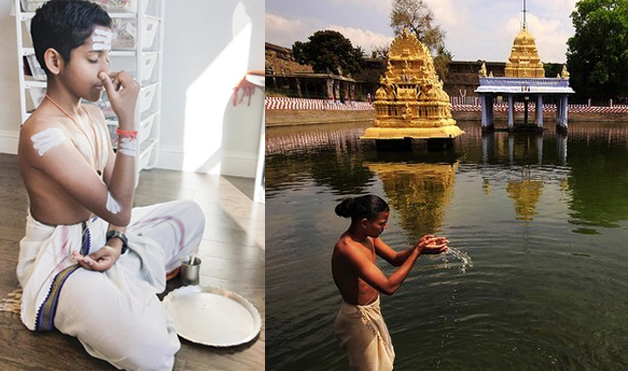
Sandhyavandana is a short religious practice that Hindus perform thrice daily. It combines specific mantras with breathing practice (pranayama) and meditation (dhyana). Regular practitioners perform it just before sunrise, at noon and just before sunset — times when the mind and body are most alert — each session taking about 10–15 minutes.
Doing Sandhya-Vandana first creates the eligibility for the rituals that follow it; rituals done without it are regarded as fruitless by Dharma Sastra. Thus it forms the very foundation for all other Vedic rituals.
Performed with fervor, Sandhya Vandana bestows Brahma Tejas and spiritual prosperity, builds discipline and rhythm, strengthens bonds between elders and the young, and connects us to our ancient culture and to nature.
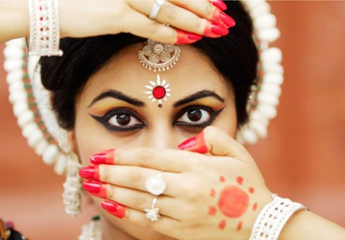
The word Bindi derives from the Sanskrit Bindu — the point at which cosmic creation begins, denoting the mystic third eye. The bindi is worn between the eyebrows, where the Ajna (brow / third-eye) chakra and the pineal gland lie.
Around 3000 BCE the rishis described seven main chakras running along the centre of the body; the sixth occurs exactly where the bindi is placed. Focusing attention on this spot is said to aid concentration and inner awareness. Traditionally the bindi paste was made from sandalwood, turmeric, saffron, ash and other cooling substances, applied over this nerve centre to keep one calm and conserve energy.
The two are often confused. The Tilaka is worn for religious or spiritual purposes and by both men and women, often signifying one's religious group. The Bindi is worn by women, traditionally as an auspicious sign of marriage and for adornment.